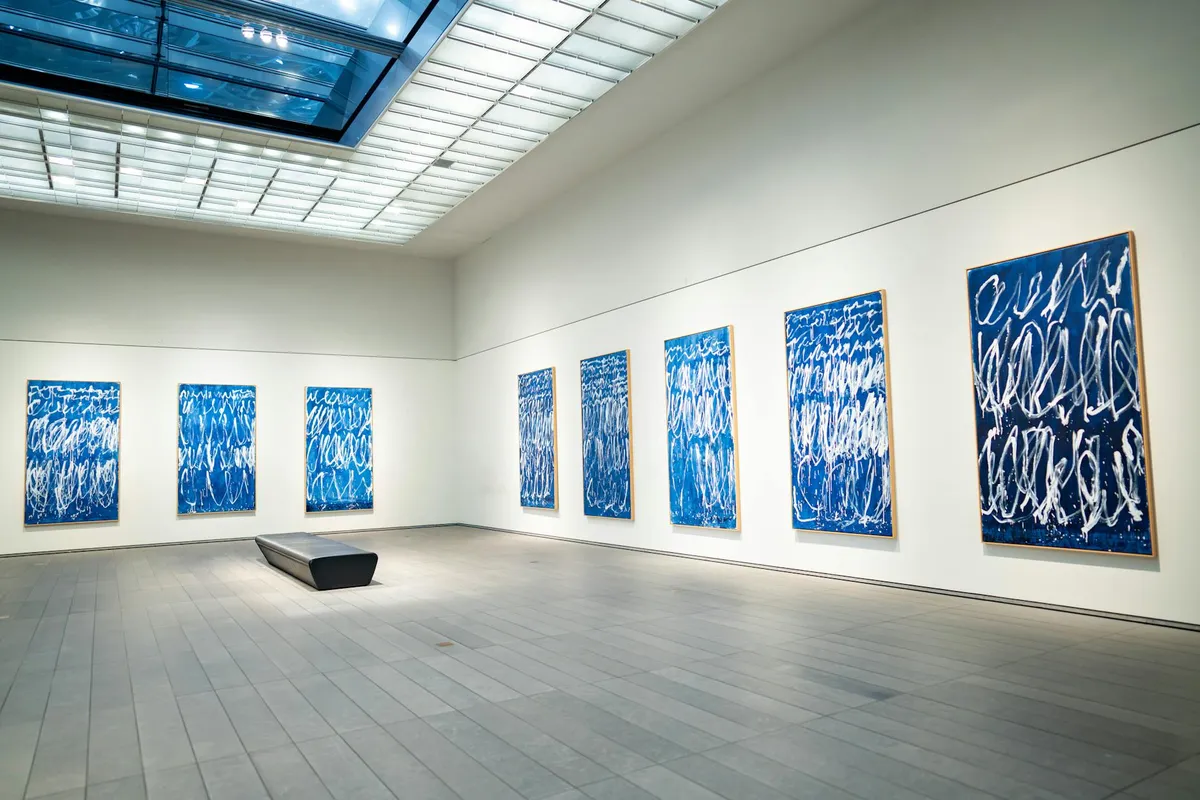
The small contemporary art gallery I am thinking of occupies a converted commercial space in a non-central neighborhood. The owner is a former curator who opened the gallery seven years ago. The gallery represents twelve artists. It mounts perhaps eight exhibitions per year. It survives on art sales that vary wildly from month to month and that, in most months, do not cover the rent.
The owner subsidizes the gallery from her own savings and from occasional consulting work. She has been doing this for seven years. The economics are precarious. She knows it. The artists she represents know it. The dozen or so collectors who buy from her know it.
This gallery is, in some essential way, how contemporary art reaches the public.
What small galleries actually do
Small contemporary galleries serve several functions that nothing else replicates.
They identify and develop artists. The gallery owner sees thousands of artists' work over their career. They identify which artists they think are doing serious work. They commit to representing those artists, often before the artists are commercially viable. They support the artists' development through years when income is sparse.
They produce exhibitions. The exhibition is the basic format through which contemporary art reaches viewers. Galleries produce most exhibitions, particularly for emerging and mid-career artists. Without galleries, most contemporary artists would have no platform for showing finished work.
They connect artists with collectors. The relationships between artists and collectors are mostly mediated through galleries. Galleries identify potential collectors, introduce them to artists, develop the trust that supports purchase decisions, and handle the transaction logistics.
They contribute to art history. The artists who are taken seriously over time are largely the artists who were represented by serious galleries during their working careers. Galleries are part of the validation infrastructure that distinguishes serious work from amateur work.
They preserve cultural diversity. Different galleries focus on different kinds of work, different communities, different aesthetics. The diversity of small galleries collectively produces a much wider range of contemporary art than any single institution could.
The economic precarity
The economics of small galleries are difficult enough that the survival of any individual gallery is uncertain. A typical small contemporary gallery has substantial fixed costs (rent, utilities, basic operations) and revenue that comes in irregular bursts (an exhibition that sells well, a major collector that purchases multiple works, occasional art fair sales). Many months produce more cost than revenue.
The gallery owners who sustain operations across years typically do so through one of several patterns:
- Personal wealth that subsidizes the operation
- A spouse or partner with stable income that supports the gallery owner
- Occasional very large sales that fund years of operation
- Side income from consulting, teaching, or other work
- Acceptance of substantially lower personal income than other career paths would offer
The pattern across all these is that the gallery itself does not produce a sustainable income for the owner. Some other source of support is required. The work is done because the work matters to the people doing it, not because it pays.
The art fair complication
The contemporary art market is increasingly dominated by major art fairs — Art Basel, Frieze, FIAC, and dozens of regional fairs. These fairs concentrate sales activity into specific weeks at specific locations. Galleries that do not participate in major fairs are increasingly marginal to the contemporary art market.
Participation in a major fair is expensive. Booth fees, transportation, installation, staff time, hotel and meals — a single major fair can cost a gallery $50,000-100,000+. Small galleries face a difficult choice: participate at substantial cost and hope to recover through sales, or skip and risk further marginalization.
The fair-driven economics favor larger galleries that can absorb the cost. Smaller galleries struggle to participate at scale. The result is a market structure that increasingly favors a small number of major galleries while small galleries struggle for survival.
The online complication
Online platforms (Artsy, Artnet, gallery websites, social media) have created some new opportunities for galleries to reach collectors beyond their immediate geography. They have also produced new competitive pressures.
Online platforms allow collectors to see work from many galleries without visiting each. This commodifies the gallery's primary visible function (showing the work) while leaving the harder functions (artist development, relationship building, judgment about quality) less visible.
The online infrastructure has produced winners and losers among galleries. Galleries that have figured out how to use online platforms effectively have expanded their reach. Galleries that have not have lost ground to galleries that have.
The net effect on the small gallery ecosystem is mixed. Some small galleries have used online platforms to reach broader audiences than their physical location would support. Other small galleries have been displaced by larger competitors who use online platforms more effectively.
The institutional alternatives
The functions that small galleries serve could in principle be served by other institutions. Museums, university galleries, artist-run spaces, and online platforms all serve some of the same functions.
None of these alternatives fully replaces what small galleries do. Museums focus on established artists. University galleries serve specific institutional missions. Artist-run spaces lack the curatorial framework that gives galleries their function. Online platforms cannot replicate the embodied experience of seeing work in person.
The decline of small galleries, where it is occurring, is producing gaps in the contemporary art ecosystem that are not being filled by alternative institutions. The artists who would have been developed by galleries that no longer exist are not being developed elsewhere. The exhibitions that would have been mounted are not being mounted.
What this teaches
The fragility of the small gallery ecosystem is a particular case of a broader pattern: the cultural infrastructure that supports significant contemporary work depends on institutions whose economic basis is precarious.
The same pattern shows up in independent bookstores, small publishing houses, alternative theaters, independent film distributors, and many other parts of the cultural infrastructure. Each provides functions the broader culture depends on. Each operates on margins that do not reliably support the work.
The continuation of these institutions depends on individual decisions to maintain them despite the economics. The institutional fabric of cultural production is held together by people doing work that cannot quite be justified by financial returns.
What can be done
For people who care about contemporary art, several practices help support the small gallery ecosystem.
Visit small galleries. Foot traffic supports galleries even when sales do not directly result. The ecosystem of small galleries depends partly on visible engagement from the public.
Buy art from small galleries. If you collect art at any level — from a $500 print to a $50,000 painting — buying from small galleries directly supports the work they do.
Talk about small galleries. Word of mouth matters substantially in art markets. Recommending galleries you trust to potential collectors and other interested viewers extends the reach of small operations.
Subscribe to gallery mailing lists. Following the activities of small galleries creates the audience that supports their continued operation.
Recognize that gallery economics are difficult. Most gallery owners are not making the kind of income their business activity might suggest. The work they do is partly subsidized by their own personal sacrifice.
A closing observation
The gallery owner I have been describing has now been in business for seven years. She has lost money in five of those years. She continues because the work matters to her and because she has the personal financial cushion to absorb the losses.
This kind of personal sacrifice for cultural work is not unusual in the small gallery world. It is, in some sense, the basic economic structure of the work. The galleries exist because individuals decide they should exist, not because the market sustains them.
The art world we have access to is partly the product of these individual decisions. The artists whose work we see, the exhibitions we visit, the contemporary culture we engage with — all of it depends on people doing work that cannot quite be justified by what the work pays.
The galleries continue, for now, because individual people decide they should continue. The continuation is not automatic. The fragility is real.