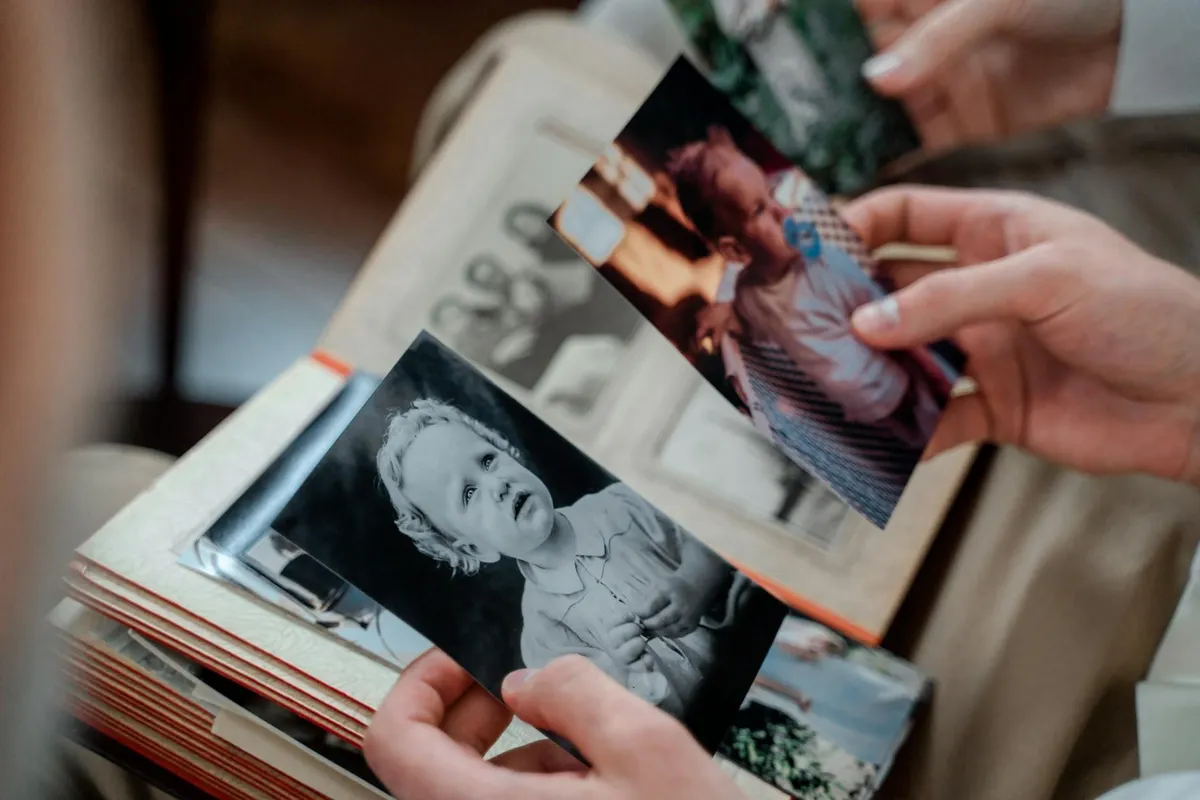
I have a photograph of my great-grandmother in the year before her marriage. She is perhaps twenty years old. The photograph is a formal studio portrait, made in the small Eastern European town where her family lived. The pose is conventional for the period. The lighting is competent. The expression is the slightly strained dignity that long exposure times produced in formal portraits of that era.
I never met this woman. She died decades before I was born. The photograph is the only direct visual evidence I have of her existence. Looking at it produces a strange complex of feelings that does not quite fit any familiar emotional category.
This is, I suspect, a common experience. Most people who have access to family photographs going back generations have looked at images of relatives they never met. The relationship is intimate (genetic ancestor, contributor to one's own existence) and entirely abstract (never met, no living memory, mediated only through this single photographic image).
What the photograph actually shows
The photograph shows a young woman in formal dress, in a studio setting, in a particular year and place. The information is specific. The face is hers. The clothes are what she chose to wear. The setting is what was available to her at that moment.
The photograph does not show much of what we want to know about her. What she sounded like. How she moved. What she found funny. What she dreamed about. What she feared. The thousand small features of personality that constitute who someone actually was.
The photograph captures one specific moment in this one specific person's life. The moment lasted perhaps a tenth of a second. The person lived for many decades. The photograph is, in a strict sense, an extremely thin slice of evidence about a life that was much larger than any photograph could capture.
The power of the thin slice
And yet the thin slice carries weight beyond what its information content would suggest. Looking at the photograph produces a sense of the person in ways that text descriptions cannot replicate.
I know from family records that this woman was born in 1898. I know she emigrated as a young married woman. I know she had three children. I know her husband's name and her father's name and the small town she was born in. None of this information produces the felt sense of her existence that the photograph produces.
The photograph contributes something the text does not. The face was hers. The body was hers. She was specifically this person, with these features, who lived in this world, on this day in this year. The photograph confirms her specificity in a way that biographical text cannot.
The strangeness of the relationship
The relationship I have with this woman through the photograph is strange. She does not know me; I am unknown to her, decades after her death. I know almost nothing about her; the text record is thin, and the people who knew her are themselves long dead.
And yet she is a constituent part of who I am. Her decisions produced my grandfather. His decisions produced my father. His decisions produced me. Her existence is causally connected to my existence in ways that nothing else in the world is.
The connection is real and substantial in genealogical terms. It is also entirely abstract in terms of personal acquaintance. The photograph mediates between these two facts in a way that nothing else does.
What family photographs preserve
Family photographs serve a specific function across generations that nothing else replicates. They preserve the specificity of individual people across times when those individuals can no longer be met.
Without the photograph, my great-grandmother would be just a name and some biographical facts. Her specificity as an actual individual person would be lost. The photograph keeps that specificity available, however partially.
Multiplied across generations, family photographs maintain a thread of specificity connecting the present to the past. The faces of ancestors persist. The specific people who produced our existence remain partially visible to us, even after their lives have ended.
This is one of the substantial cultural functions of photography that does not get much attention in art-historical discussions of the medium. Most photographs ever made are family photographs. Their cumulative cultural function is the maintenance of family memory across generations.
The contemporary problem
The contemporary problem with family photography is paradoxical. We make more family photographs than any prior generation by a factor of perhaps a thousand. We preserve them less well than perhaps any prior generation.
The phone-camera era has produced enormous quantities of family imagery. The same era has produced essentially no infrastructure for preserving that imagery across generations. The photographs sit in cloud accounts that may or may not persist, in app ecosystems that may or may not survive, in formats that may or may not be readable in 50 years.
The physical photographs that previous generations produced — printed, often in albums, stored in physical form — survive in ways that contemporary digital photographs may not. My great-grandmother's photograph, made on glass plate and printed on paper, has survived 125 years and counting. The phone photographs being made today are unlikely to survive that long without deliberate preservation effort that almost no one is making.
The result is that future generations may have substantially less photographic record of their immediate ancestors than my generation has of distant ancestors. The technology has improved while the preservation has degraded.
What can be done
For people who care about preserving family photographs across generations, several practices help.
Print important photographs. Physical prints survive in ways that digital files often do not. The photographs that matter — the few hundred per generation that future descendants will care about — should exist as physical objects.
Store photographs in multiple formats. Digital files in cloud, digital files on physical media, physical prints. The redundancy protects against the failure of any single preservation method.
Document the people in the photographs. An undocumented photograph of an ancestor whose face is unfamiliar is much less useful to descendants than a photograph with names and dates and contexts.
Pass photographs forward deliberately. Photographs that are not deliberately transmitted to next generations often disperse when their custodian dies. Active transmission is more reliable than passive expectation.
Preserve photographs of ordinary moments. The photographs that descendants will most value are often the casual ones that captured what their ancestors' daily lives actually looked like, not the formal posed portraits.
What the photograph means now
The photograph of my great-grandmother sits in a wooden box of family materials in a drawer in my home. It came to me through a sequence of inheritances spanning four generations. It will, I hope, continue to a fifth and sixth generation through my own care.
Each generation that has held this photograph has been the temporary custodian of an object that is older than they are and that will outlast them if they pass it forward. None of us made the photograph. All of us have benefited from its preservation. Each of us is responsible for whether it continues to exist for the next generation.
The same is true of every family photograph of substance. We are stewards rather than owners. The photographs do not belong to us; they belong, in some meaningful sense, to the longer chain of family across generations.
A closing observation
If you have access to old family photographs, look at them carefully. Notice what they show and what they do not. Notice what the specific person looked like, what they wore, how they posed, what setting they chose or were placed in.
If you have unidentified photographs of relatives whose names are unknown, consider whether anyone alive can still identify them. Once that knowledge is lost, the photographs become images of strangers rather than ancestors.
If you make family photographs in the contemporary phone-camera mode, consider whether any of them will survive. The default trajectory of phone photographs is loss within a generation. The deliberate preservation is the only way to interrupt that trajectory.
The faces of the ancestors who produced us are partially recoverable through photographs. The same will be true of our own faces, for our descendants, only if we make it so.