
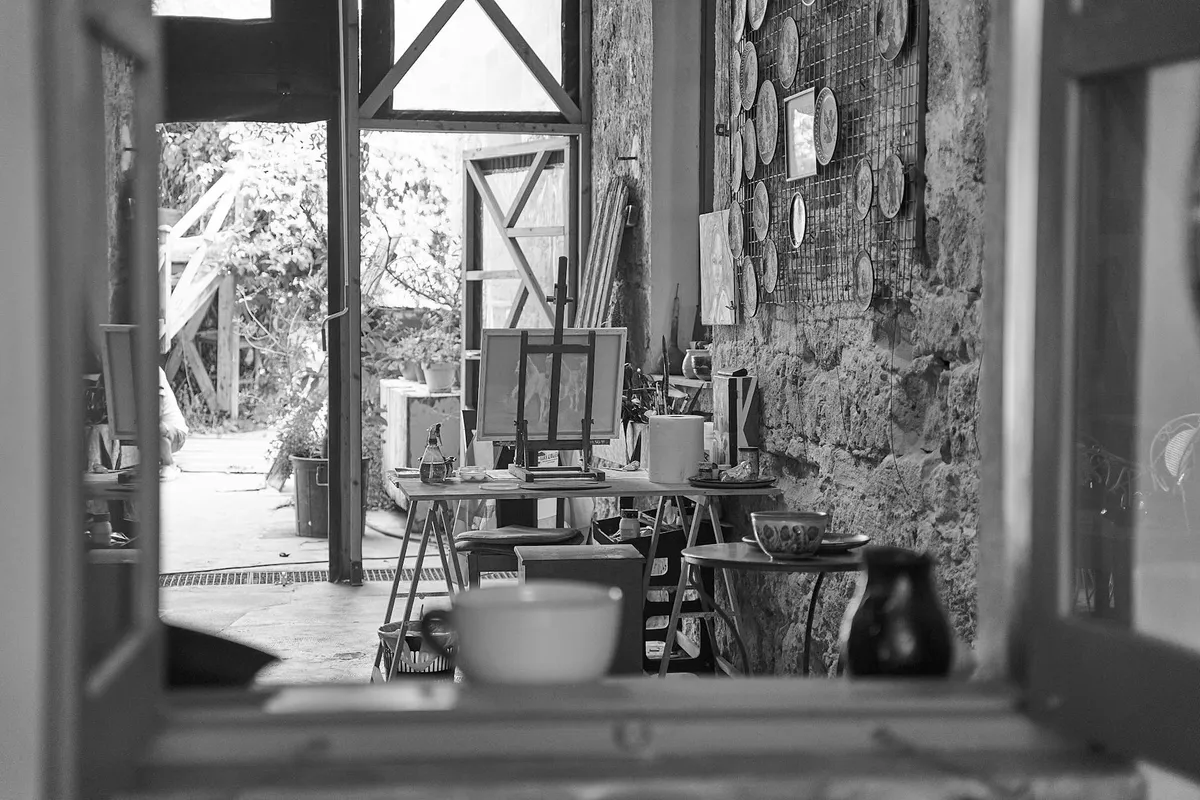
The painters who produced the bodies of work we still admire mostly worked daily. Cézanne went to his studio every day for decades. Morandi painted nearly identical still lifes day after day for forty years. Van Gogh made roughly 900 paintings in the 10 years between when he became serious about art and when he died — an average of about a painting every 4 days, sustained across a decade.
The pattern is not unique to painting. Beethoven composed daily. Bach composed daily. Most serious novelists write daily. Most serious poets work daily even when they are not writing finished poems.
The cumulative effect of this sustained daily practice substantially exceeds what intermittent intense effort can produce. The pattern is universal enough across art forms that it deserves examination.
What daily practice actually does
Several specific things happen during daily practice that intermittent practice does not produce.
Sustained development of capability. Skills that require long practice timelines (technical execution, perception, judgment) develop steadily through daily attention. Intermittent practice produces inconsistent development with substantial regression between sessions.
Accumulation of work. Daily practice produces volume over time. A painting per week produces fifty paintings per year, five hundred per decade. The body of work that emerges supports both continued development and external impact.
Maintenance of state. The mental state required for serious creative work is partly maintained by frequency of engagement. Long absences require substantial restart effort. Daily practice keeps the state available.
Resolution of problems through time. Many creative problems are not solved by direct attempt but by sustained engagement that allows solutions to emerge. Daily practice provides the sustained engagement.
Integration of failures. Most creative work fails most of the time. Daily practice provides enough volume that failures become small fractions of total output rather than catastrophic events. The relationship to failure changes when failure is one of many attempts rather than the entirety of intermittent effort.
The economic logic
The mathematics of compound effort favor daily practice substantially. A painter who works one hour daily produces 365 hours of work per year. A painter who works eight hours per day on weekends only produces 832 hours per year. The weekend painter produces more raw hours.
But the daily painter produces those hours in a way that supports skill compounding. Each session reinforces the previous session's development. The skill curve is smoother and steeper.
The weekend painter's hours include substantial restart effort each weekend. Skills developed during the previous weekend have partially regressed during the workweek. Each session begins with recovery before development can resume. The effective skill development per hour is lower.
Across years, the daily painter develops capability faster than the weekend painter despite working fewer total hours. The pattern is robust enough that most serious practitioners across art forms have converged on daily practice.
The discipline problem
The case for daily practice is straightforward. The discipline to actually do daily practice is the difficult part.
Most amateur practitioners cannot sustain daily practice for long. They start enthusiastically, work consistently for a few weeks or months, encounter some life disruption, lose the thread, restart with reduced enthusiasm, eventually drift away from the practice entirely.
The serious practitioners who do sustain daily practice across decades are mostly people whose lives have been organized around the work in ways that support the discipline. Professional artists whose income depends on production. Independent practitioners with personalities suited to solitary daily work. People who have developed strong support systems (partners, communities, routines) that enable the sustained discipline.
For people whose lives are not currently organized around the work, sustaining daily practice requires either reorganizing the life or accepting practice less frequent than daily.
What works for sustaining daily practice
The patterns that distinguish people who sustain daily practice from those who do not:
Same time of day. Practice that happens at the same time daily becomes habitual. Practice that happens whenever there is time often does not happen.
Manageable session length. Sessions that are too long become difficult to fit into life. Sustainable daily sessions are typically 1-3 hours rather than 4-8 hours.
Lower the bar on bad days. Sustainable daily practice accepts that some days produce poor work. The point is the daily engagement, not the daily masterpiece.
Protection from interruption. Practice time that is regularly interrupted is harder to sustain than time that is genuinely protected.
Visible streak preservation. Marking each day of practice on a calendar, however simple, produces a small motivation to continue the streak. Breaking a long streak is more uncomfortable than not starting one.
Acceptance of "showing up" as the criterion. The bar is doing the work, not producing good work. Doing the work consistently produces good work eventually. Trying to produce good work consistently fails.
The relationship between daily practice and inspiration
The romantic conception of artistic work — inspiration striking, transformative bursts of creative effort, works produced in flashes of brilliance — is at odds with how most serious artists actually work.
Daily practitioners typically describe inspiration as something that emerges from sustained engagement rather than something that strikes from outside. The work produces the ideas. The discipline produces the conditions for ideas to emerge.
This is not anti-romantic. The work that emerges from sustained daily practice often has the qualities the romantic conception ascribes to inspiration. The difference is in how those qualities arrive — through patient engagement rather than through dramatic visitation.
The practical implication: waiting for inspiration to strike before working is a losing strategy. Working daily and allowing inspiration to emerge from the work is a winning strategy.
The compounding across decades
The cumulative effect of decades of daily practice is substantial in ways that are difficult to convey to people who have not experienced it.
A painter who has worked daily for thirty years has produced thousands of paintings. They have made and corrected tens of thousands of small errors. They have developed perception, technique, judgment, and intuition that no shorter practice can produce. They have accumulated a body of work and a relationship with their medium that compounds across years.
This accumulated capability is not equivalent to talent. Many talented amateurs never develop the capability that less talented daily practitioners develop. The discipline matters more than the initial gift.
This is partly why famous artists tend to be older. The capability that produces work of substance typically requires decades of daily practice to develop. The artist who produces important work in their twenties is rare; the artist who produces important work in their fifties or sixties is common.
What this teaches about creative work generally
The patterns of daily practice in art apply to most creative work. Writing. Composition. Scientific research. Engineering design. Almost any domain where sustained capability development matters benefits from daily engagement.
The pattern is also broadly applicable beyond strictly creative work. Skill development in any domain — programming, athletics, language acquisition, professional expertise — follows similar dynamics. Daily engagement compounds in ways that intermittent engagement does not.
This is not a profound discovery. It is something most accomplished practitioners across most domains know from experience. The wider cultural attention to "productivity hacks" and "10x development" obscures the more boring truth that sustained daily work over years is what produces substantial capability.
A closing observation
For anyone serious about creative work — whether visual art, writing, or any other domain — the practice question is the central one. The work that emerges over decades is largely determined by what kind of practice has supported it.
Daily practice is not glamorous. It does not photograph well. It does not produce viral moments. It produces, slowly and reliably, the cumulative capability that distinguishes serious practitioners from intermittent ones.
The discipline is available to anyone willing to commit to it. The discipline is also genuinely difficult to sustain across years. Most people who start do not continue. Those who continue are mostly the people who organize their lives to support the continuation.
The work waits. The discipline produces the work. Each day, at the appointed time, the practitioner returns to the studio.