Street photography thrives on capturing candid moments and the essence of public life. Unlike studio or landscape photography, it demands quick decisions and an intuitive understanding of a dynamic environment. The difference between a fleeting snapshot and a compelling image often lies in the photographer's deliberate application of three core elements: composition, light, and timing. Mastering these principles allows photographers to transform chaotic scenes into visually coherent and emotionally resonant stories, making their work stand out in a crowded visual landscape.
Mastering Street Photography Composition
Composition in street photography is about organizing visual elements within the frame to create a strong, engaging image. It’s not about finding a perfect scene, but rather about structuring the available chaos into an intentional narrative.
Rule of Thirds and Leading Lines
The Rule of Thirds suggests placing subjects or points of interest along the lines or intersections of a 3x3 grid, creating balance and visual tension. In street settings, this means positioning a pedestrian at an intersection point or aligning a building's edge with a vertical line. Leading lines—such as sidewalks, fences, or architectural elements—draw the viewer's eye through the frame, guiding them to the main subject or creating depth. Utilize natural lines to add direction and dynamism to your street scenes.
Framing and Layering
Natural frames, like doorways, windows, or archways, can isolate a subject and add context, drawing attention directly to the intended focal point. Layering involves arranging multiple subjects or elements at different depths within the frame. This creates a sense of depth and complexity, allowing the viewer to discover new details upon closer inspection. Look for foreground elements that complement, rather than distract from, your main subject.
Negative Space and Symmetry
Negative space, the empty area around and between subjects, can emphasize a lone figure or a specific detail, creating a minimalist and impactful image. It allows the subject to breathe and stand out without clutter. Conversely, symmetry, often found in architecture or reflections, can create a sense of order and balance. Identifying symmetrical patterns in urban environments can lead to visually striking and harmonious compositions.
Harnessing Light in Urban Environments
Light is the painter's brush in photography, shaping mood, texture, and dimension. In street photography, understanding how different types of light behave and how to use them to your advantage is crucial for creating evocative images.
Golden Hour and Blue Hour
The "golden hour," occurring shortly after sunrise and before sunset, provides soft, warm, directional light that adds a flattering glow to subjects and casts long, dramatic shadows. This light creates depth and a nostalgic atmosphere. The "blue hour," just before sunrise and after sunset, offers a cool, ambient light that can make city lights pop and create a moody, contemplative feel. These times are ideal for capturing silhouettes or the interplay of natural and artificial light.
High Contrast and Shadows
Midday sun, often considered harsh, can be leveraged for high-contrast images. Strong light creates deep, distinct shadows that can be used as abstract compositional elements, adding graphic interest and drama. Look for geometric patterns formed by shadows on walls or pavements, or use them to obscure parts of a subject, creating mystery. This approach transforms what might be seen as challenging light into a creative opportunity.
Artificial Light Sources
At night, artificial light sources like neon signs, streetlights, and shop windows become your primary illumination. These lights can create vibrant colors, strong highlights, and deep shadows, offering a different palette for street photography. Experiment with long exposures to capture light trails or use fast apertures to isolate subjects under specific light sources, creating pockets of illumination in the darkness.
Pro Tip: Patience is paramount in street photography. Often, the best light or the most compelling interaction requires waiting in one spot for several minutes, or even longer, for the elements to align. Don't rush; observe your surroundings and anticipate the moment.
The Art of Timing in Street Photography
Timing is the moment of capture—the fraction of a second when all compositional and lighting elements converge to tell a story. It's what differentiates a static image from one that feels alive.
Anticipation and Observation
Successful street photographers develop a keen sense of anticipation. This involves observing human behavior, predicting movement patterns, and understanding how people interact with their environment. By watching for subtle cues—a glance, a gesture, a pause—you can position yourself and your camera to be ready for the decisive moment before it fully unfolds.
Capturing Peak Action
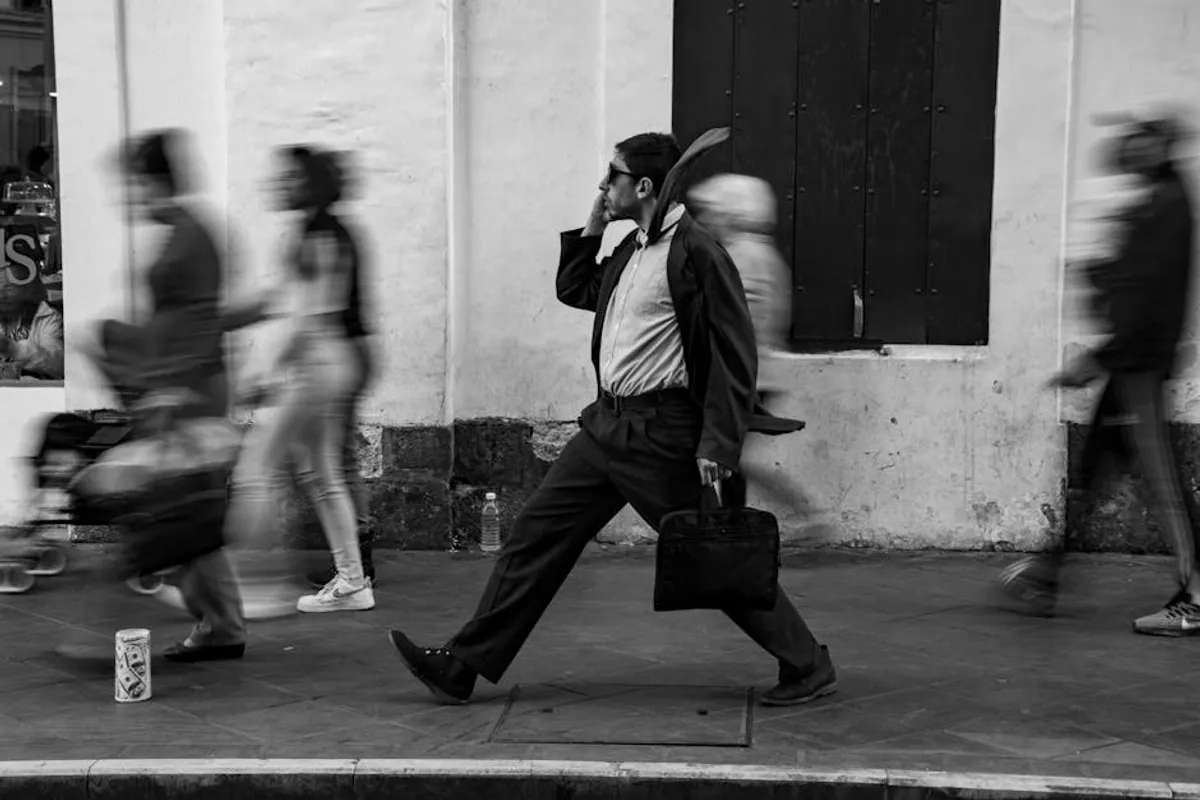
The "decisive moment," a concept popularized by Henri Cartier-Bresson, refers to the instant when the visual elements and human action within the frame reach their maximum expressive potential. This could be a person stepping into a perfect patch of light, a candid interaction between strangers, or a gesture that encapsulates an emotion. Capturing this peak action requires quick reflexes and an understanding of your camera's capabilities, whether freezing motion with a fast shutter speed or showing intentional blur for dynamism.
Environmental Interaction
Timing extends beyond just capturing people; it also involves capturing the interaction between people and their surroundings. This could be a person's silhouette perfectly framed by a building, a reflection creating an unexpected juxtaposition, or a momentary alignment of a subject with an advertisement. These interactions add layers of meaning and often create the most memorable street photographs.
Developing Your Street Photography Eye
Mastering composition, light, and timing is an ongoing process that refines your photographic vision. Each element contributes to the overall impact and narrative of your street photographs. Consider these points as you practice:
- Composition: Continuously look for natural frames, leading lines, and opportunities for layering. Experiment with negative space to simplify busy scenes.
- Light: Pay attention to the quality and direction of light throughout the day. Understand how it sculpts subjects and creates mood.
- Timing: Practice anticipating moments by observing people and their environment. Be ready to press the shutter at the peak of action or interaction.
- Practice: The more you shoot, the more intuitive these elements become. Review your work critically to understand what succeeded and why.
- Patience: Many compelling street photographs are the result of waiting for the right confluence of elements.
By consistently integrating these principles into your practice, you will develop a more discerning eye and the ability to capture the unique, fleeting narratives that define street photography.
Frequently Asked Questions
What is the most important element in street photography?
While all three are crucial, timing is often considered the most unique and challenging aspect, as it relies on capturing fleeting, unrepeatable moments. Without precise timing, even perfect composition and light can fall flat.
What gear is essential for street photography?
A compact, discreet camera with a versatile prime lens (like 35mm or 50mm equivalent) is often preferred for its portability and ability to blend in. However, the most essential gear is the photographer's eye and ability to observe.
How can I overcome shyness when photographing strangers?
Start by photographing from a distance, or focus on scenes where people are part of a larger environmental context. Develop confidence by being respectful, not intrusive, and understanding local laws regarding public photography.
How can I develop a unique style in street photography?
Regular practice, critical self-review, and studying the work of diverse street photographers are key. Experiment with different approaches to composition, light, and timing until you discover what resonates most with your personal vision.